From Conversation to Change: Advancing Better Policies and Workplace Cultures for Women in Eye Health
Published on
November 3, 2026
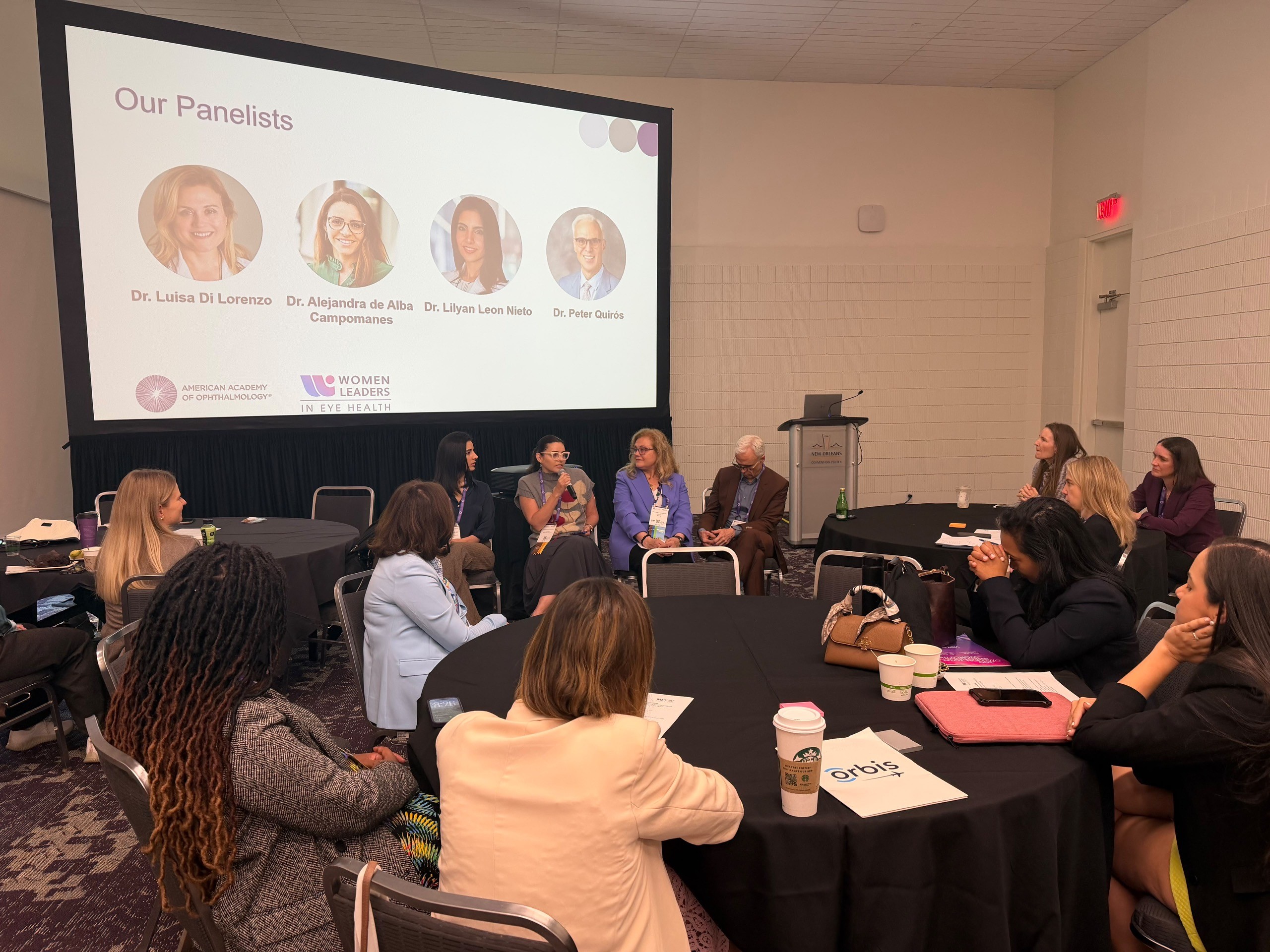
Authored by Kathleen Sherwin, Dr. Erin Shriver and Dr. Sara Wester
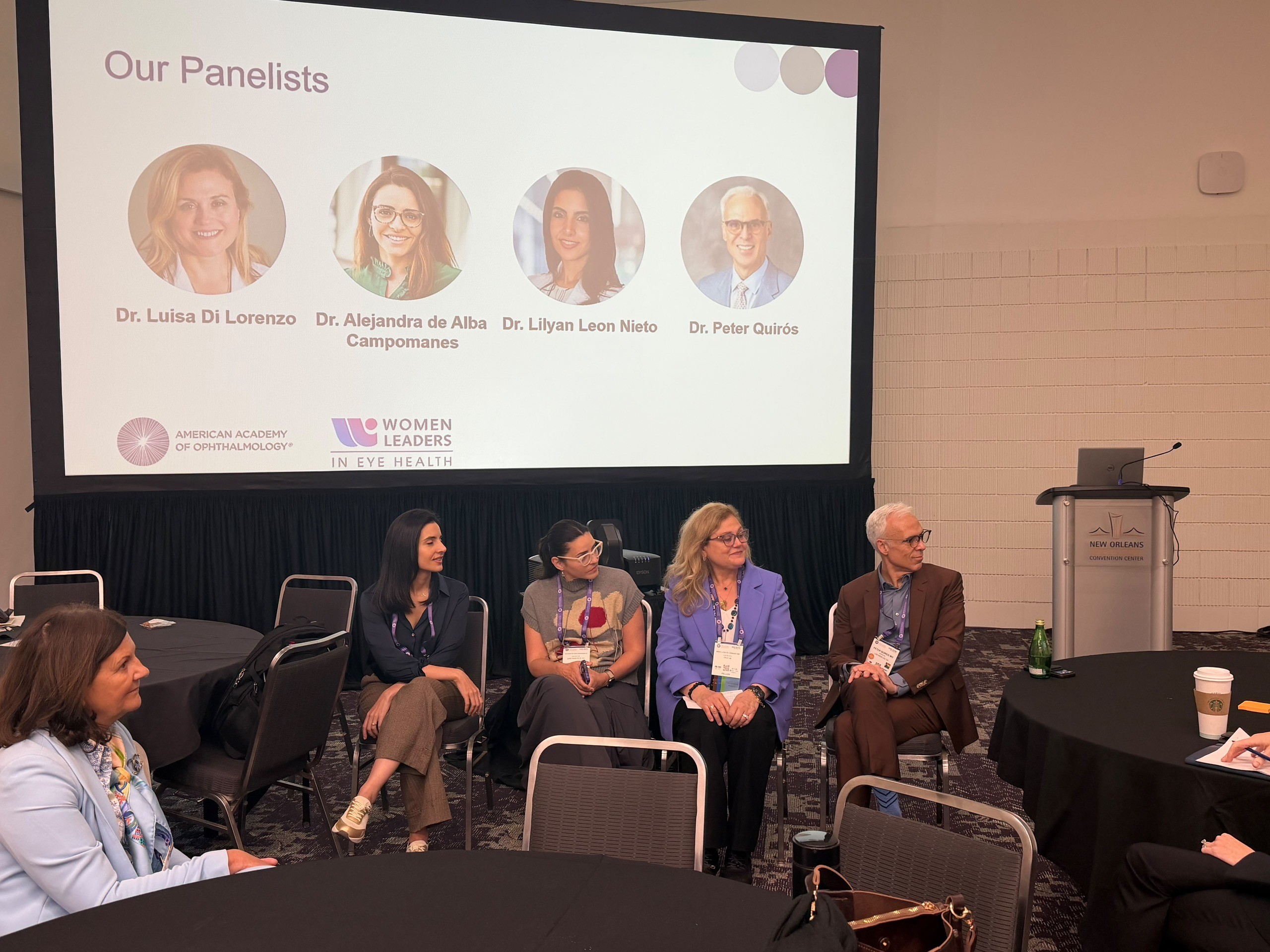
At AAO 2026 in New Orleans, more than 60 ophthalmologists, eye health leaders, allies, and emerging professionals gathered for the fourth annual Women Leaders in Eye Health (WLEH) Coffee Hour in collaboration with AAO. What began as a networking event several years ago has evolved into a valued space for candid conversations, shared learning, and collective action around advancing gender equity in eye health.
This year's session, From Conversation to Change: Advancing Better Policies and Workplace Cultures for Women in Eye Health, focused on a question that resonated across career stages, specialties, and geographies:
What practical changes are needed to better support women throughout their careers in eye health?
Celebrating Progress While Acknowledging Challenges
The session opened with remarks from Dr. Erin Shriver, Committee member of the American Academy of Ophthalmology and Kathleen Sherwin, CEO of Orbis International, who reflected on the growing partnership between AAO and WLEH and the importance of creating spaces where women leaders can connect, learn, and drive change.
While progress has been made in increasing the representation of women in ophthalmology, participants emphasized that representation alone is not enough. Across regions and career stages, women continue to encounter barriers related to leadership opportunities, promotion pathways, workplace culture, caregiving responsibilities, and access to influential networks.
The discussion focused not only on how women can succeed within existing systems, but on how institutions, professional associations, and employers can create policies and cultures that enable women to thrive and lead.
Voices from Across the Profession
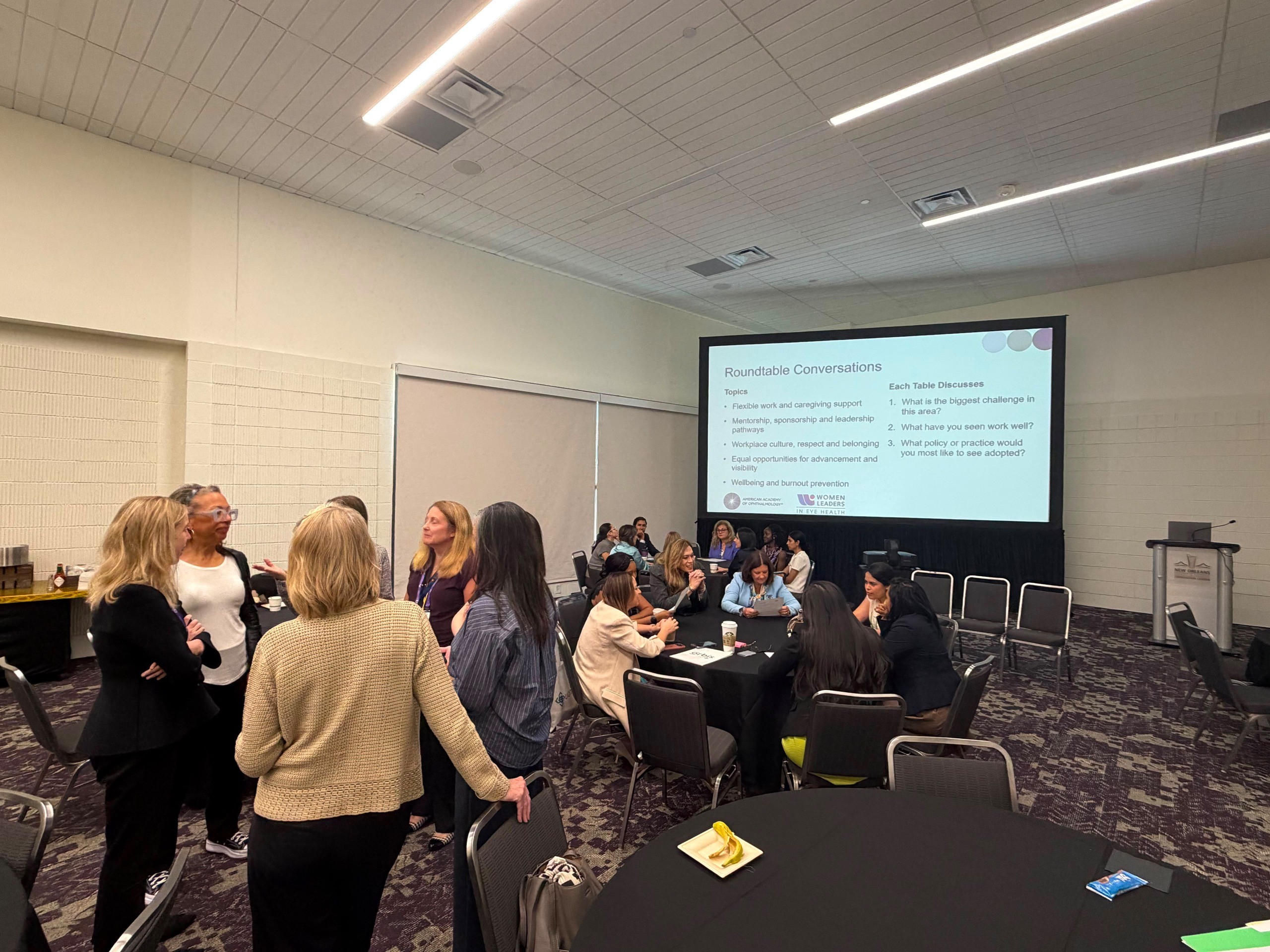
The panel brought together diverse perspectives from clinical practice, academic medicine, organizational leadership, and allyship.
Through personal stories and professional reflections, speakers explored how policies, workplace culture, and sponsorship have shaped their careers and influenced opportunities for advancement.
A recurring theme was the gap between good intentions and meaningful institutional change. Participants discussed how many organizations have diversity and equity commitments on paper, yet women may still encounter unequal access to leadership opportunities, sponsorship, visibility, and decision-making roles.
In discussing caregiving responsibilities, one panelist noted that some physicians were advised to step away from their training programs after having a baby, with the expectation that they would return later, highlighting the challenges many women face in balancing family responsibilities with career progression.
The discussion highlighted that mentorship is important, but sponsorship is often what opens doors. Creating equitable pathways to leadership requires institutions to actively identify and support talented women, ensure fair access to opportunities, and build accountability for advancement outcomes.
The discussion also underscored the importance of moving beyond simply increasing the number of women entering eye health. The ultimate goal is ensuring that women are represented wherever decisions are made, whether in clinical leadership, research, training programs, professional societies, or health systems.

A Global Conversation About Systemic Change
One of the most powerful aspects of the Coffee Hour was the diversity of perspectives represented in the room. Participants shared experiences from countries with very different workforce realities and policy environments. Several discussions highlighted how women in some low- and middle-income countries face challenges that go beyond leadership representation. For example, inadequate pregnancy and parental leave policies can force women trainees and clinicians to make difficult choices between family responsibilities and professional advancement.
Across settings, participants emphasized that workplace flexibility, caregiving support, respectful workplace cultures, and equitable promotion practices should not be viewed as individual accommodations, but as institutional responsibilities that strengthen the profession.
From Discussion to Action
During small-group discussions, participants explored five priority areas: flexible work and caregiving support; mentorship, sponsorship, and leadership pathways; workplace culture; advancement and visibility; and burnout prevention.
While experiences varied, several common priorities emerged:
- Expanding sponsorship opportunities that connect women to leadership roles and professional visibility.
- Strengthening family-friendly policies, including parental leave and flexible work arrangements.
- Ensuring transparency and equity in promotion and leadership selection processes.
- Creating workplace cultures where respect, inclusion, and psychological safety are actively reinforced.
One participant emphasized that it is not enough to have a DEI committee in name only. She shared that despite serving on a DEI committee, she encountered resistance when trying to advance meaningful changes. For these types of committees to be effective, they must have a clear purpose, leadership support, decision-making authority, and the resources needed to turn commitments into action.
Participants also shared examples of promising practices already being implemented within their institutions, demonstrating that practical solutions exist and can be adapted across contexts.
Commitments to Change
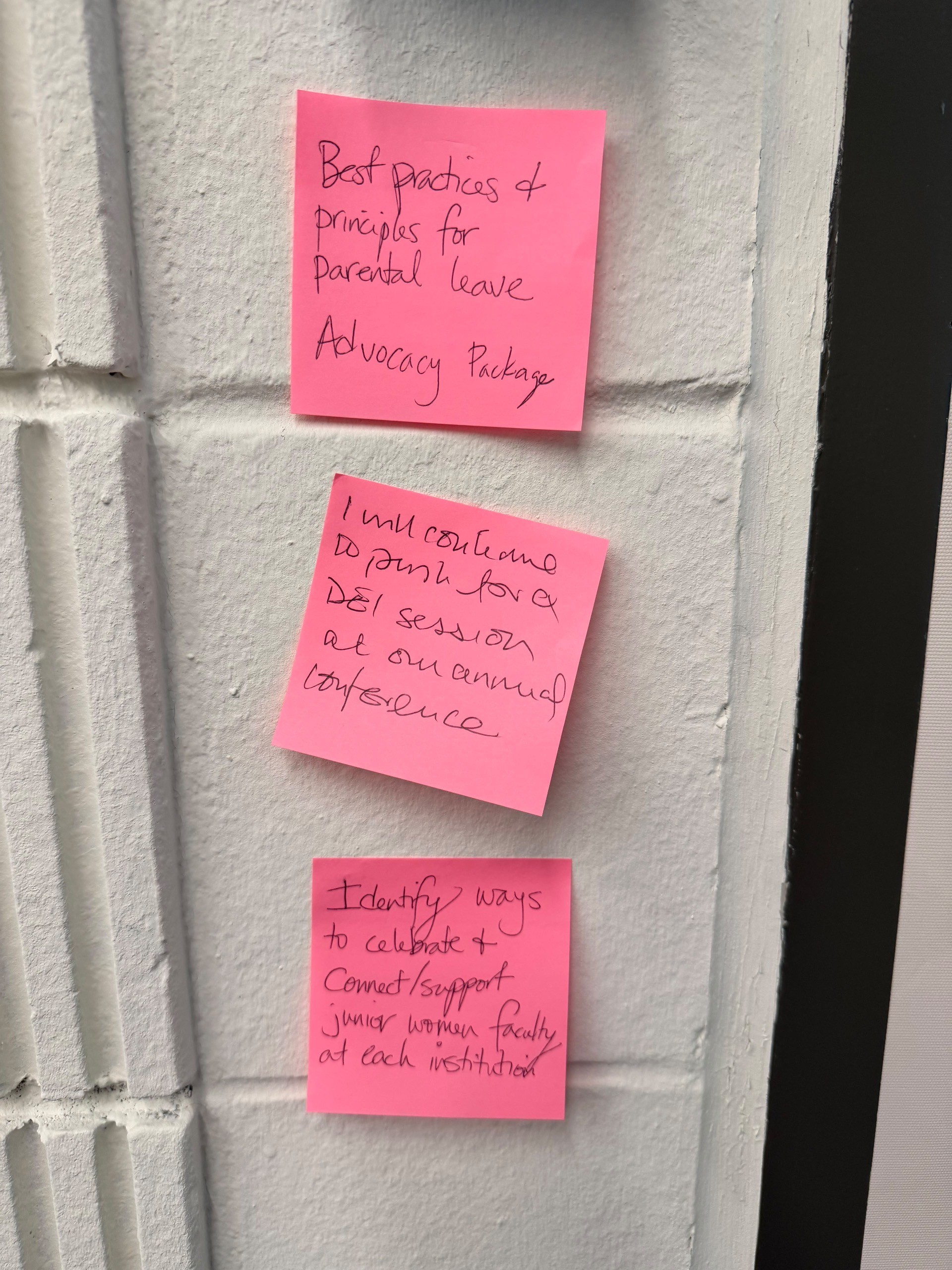
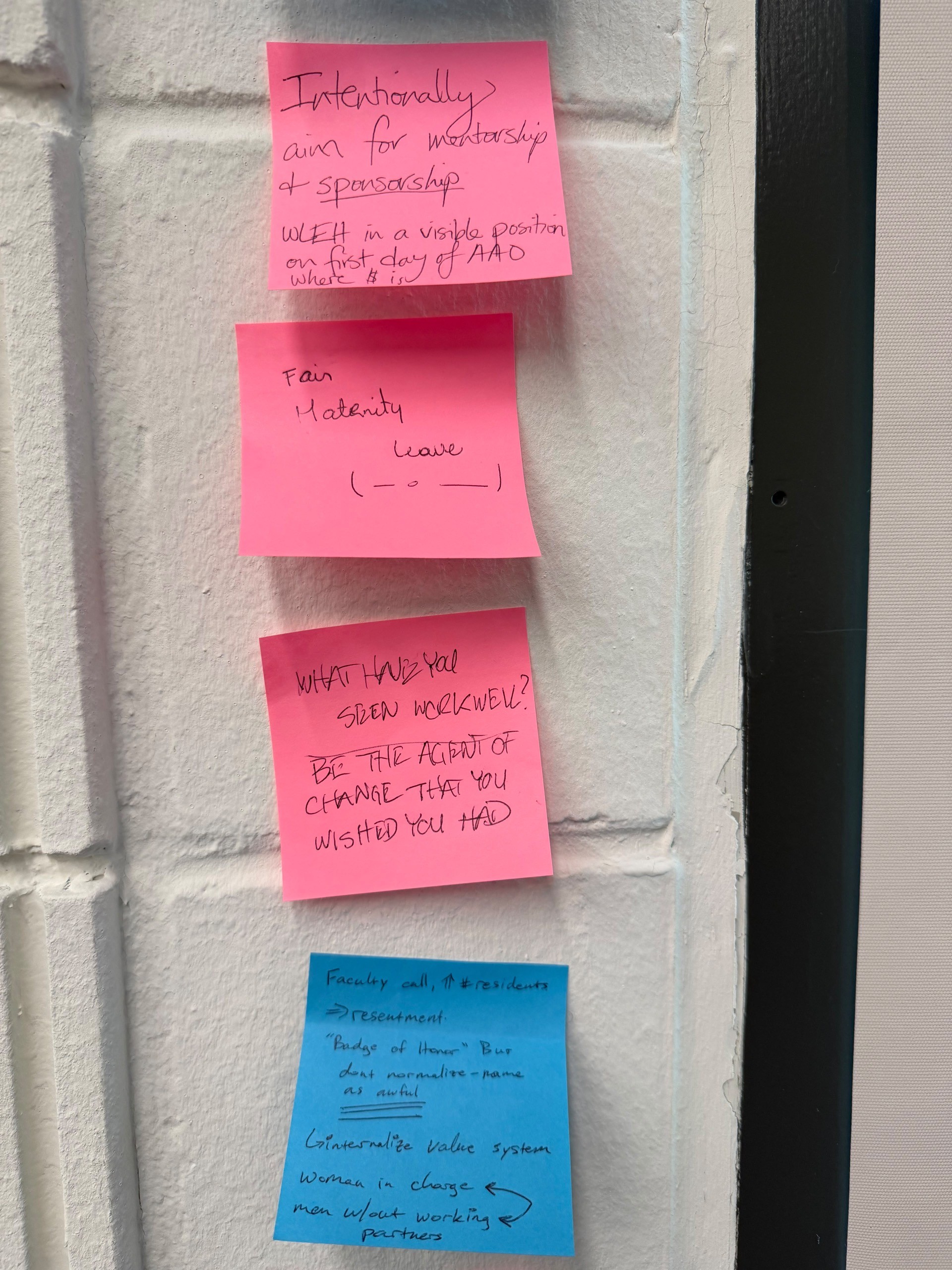
As the session concluded, participants were invited to write one action or change they hoped to advance within their organizations.
The resulting Commitment Wall reflected both personal and institutional ambitions. Participants called for stronger sponsorship of emerging leaders, more equitable committee and conference representation, improved parental leave policies, and greater accountability for diversity and inclusion commitments.
These reflections reinforced an important message: sustainable progress requires more than individual effort. It requires organizational commitment, policy reform, and collective advocacy.
Looking Ahead
As WLEH looks to the future, the message from participants was clear: the field does not need more conversations alone. It needs conversations that lead to measurable change.
The Coffee Hour highlighted an opportunity for WLEH to continue evolving from an important network for connection and dialogue into an increasingly influential platform for policy change, institutional accountability, and women's leadership across global eye health.
Future opportunities could include developing policy and advocacy briefing packages, hosting webinars that showcase institutional best practices, documenting successful workplace policies from around the world, and strengthening engagement with professional associations and their leadership.
By bringing together leaders, emerging professionals, and allies to identify shared challenges and opportunities, this year's Coffee Hour demonstrated both the urgency of change and the collective willingness to pursue it.
The conversation may have started over coffee, but the goal is much larger: creating workplaces, institutions, and systems where women in eye health can lead, advance, and thrive.
BLOG
You may also like
Discover thought news, pieces, interviews, and stories that spotlight women driving innovation, equity, and leadership in eye health worldwide.