
Country Teams Explore the Women’s Circles and Coffee Hours Models
Published on
July 29, 2026
%20-%20Edited.jpg)
By: Jennifer Tapia Boada
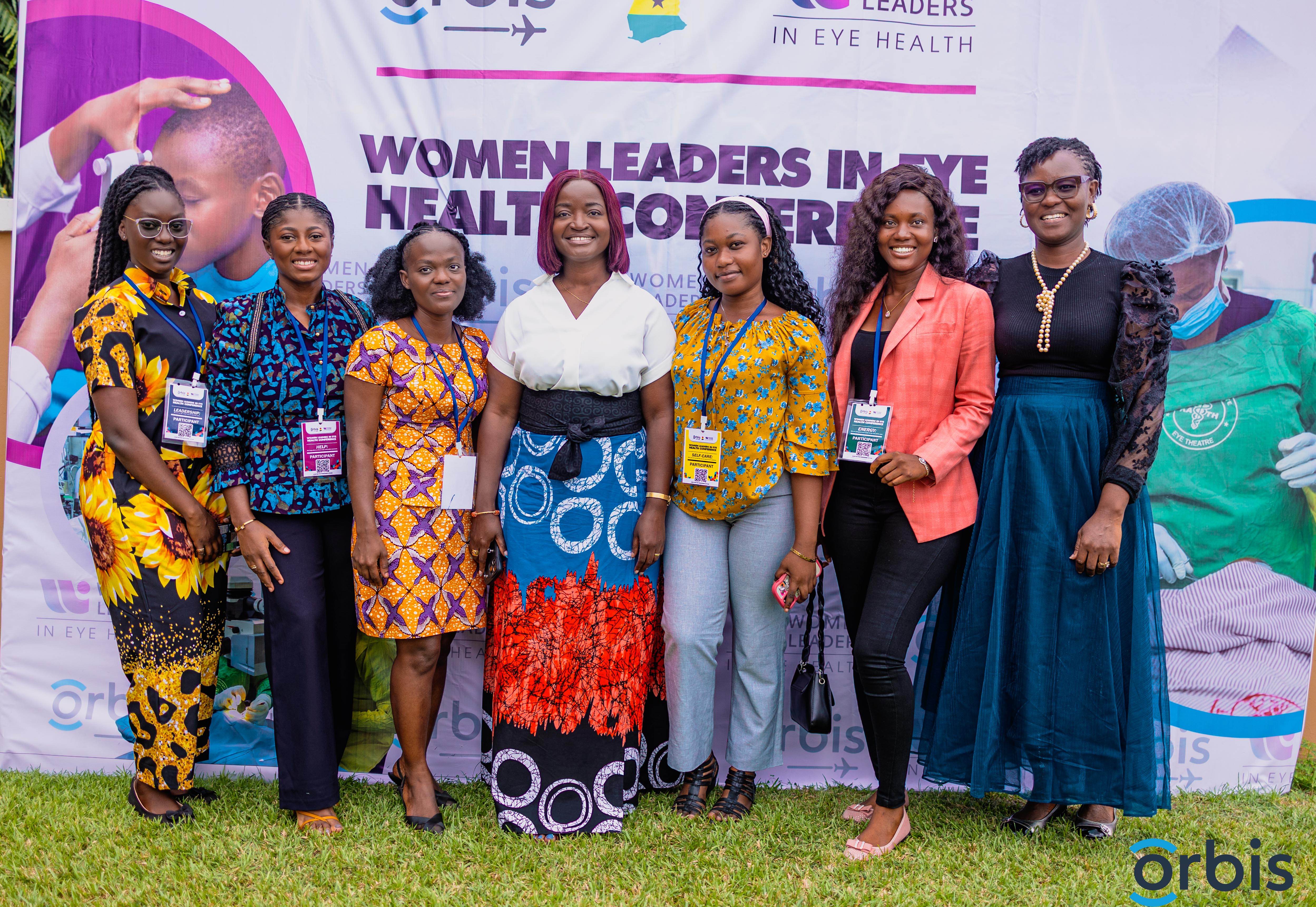
On 29 July 2026, Orbis Country Directors, Gender Champions, and program teams came together for a practical workshop focused on two of the most promising approaches emerging from the Women Leaders in Eye Health initiative: Women’s Circles and Coffee Hours. Facilitated by Clare Szalay Timbo, the session explored how these models can help strengthen gender integration, leadership development, workforce participation, and institutional change across diverse country contexts.
.jpg)
The workshop was designed to equip country teams with resources, real-world examples, and approaches that can be integrated into existing eye health programs and workforce development efforts. Discussions emphasized that gender equity is not only an important social objective, but also a critical component of stronger health outcomes, more inclusive health systems, and sustainable leadership development.
Clare highlighted gender integration as a strategic organizational priority linked to stronger and more equitable eye health systems. Participants explored how gender considerations can be embedded into future planning, portfolio development, budgeting processes, and workforce initiatives. The discussion reinforced a shared understanding that gender equity should not be viewed as a stand-alone activity, but as a lens that strengthens the effectiveness and sustainability of broader programming.
The session also positioned WLEH within a larger health systems-strengthening agenda, emphasizing the importance of leadership opportunities, mentorship, workforce advancement, and inclusive professional development pathways for women in eye health.
Women’s Circles
A significant portion of the workshop focused on the Women’s Circles model, a peer-support and leadership development approach that has expanded since its pilot phase. Participants learned how the model was initially launched through a Training-of-Trainers process and has since been adapted across multiple countries. The discussion emphasized that Women’s Circles are intentionally flexible and can be tailored to local needs, embedded within existing programs, or scaled through additional facilitator training.
Country examples demonstrated how Women’s Circles are creating meaningful opportunities for mentorship, networking, leadership development, and well-being. Participants also explored how these spaces help address challenges that cannot be solved through technical training alone, including work-life balance, cultural expectations, networking barriers, policy constraints, and leadership opportunities.
One particularly inspiring example came from Bangladesh, where a regional Women’s Circle based in Rangpur now brings together ophthalmologists, nurses, counselors, and other professionals across multiple districts. The initiative has already generated positive results and is helping lay the foundation for a future national platform in collaboration with the Ophthalmological Society of Bangladesh.
.jpg)
The Role of Coffee Hours
The workshop also explored the evolution of Coffee Hours as a tool for leadership development and organizational change. Unlike traditional networking events, Coffee Hours are designed to create structured conversations around important but often under-discussed issues, including mentorship, work-life balance, self-advocacy, confidence in leadership, and workplace barriers.
Participants reflected on how these conversations can become catalysts for action by helping identify solutions, engage decision-makers, and influence institutional practices. Discussions highlighted challenges such as pay equity, harassment policies, delegation practices, flexible working arrangements, and leadership representation, issues that require broader stakeholder engagement to address sustainably.
As Clare noted, while Women’s Circles primarily create supportive peer networks, Coffee Hours can provide opportunities to engage leaders, ministries, institutions, and other stakeholders in conversations about structural change.
Learning from Country Experiences
Throughout the workshop, country teams shared examples demonstrating how gender-responsive approaches are already creating impact.
Participants learned about Mongolia’s experience, where a Coffee Hour evolved into a broader movement that included a national survey on gender-related experiences among eye health professionals, the creation of a Women Ophthalmology Worldwide chapter, the establishment of a Women’s Circle, and plans for additional engagement later this year. The example illustrates how dialogue can generate evidence, strengthen networks, and inspire sustained action.
Additional examples included India’s leadership development program for women optometrists, Ethiopia’s integration of eye health services within Gender-Based Violence support systems, and Peru’s partnerships with government stakeholders to advance gender-responsive eye health through policy engagement and cross-sector collaboration.
.jpg)
Looking Ahead
The workshop concluded with a strong commitment to continued peer learning and collaboration across countries. Participants were encouraged to identify successful practices, share challenges, and contribute lessons that can inform future Gender Champion discussions.
As WLEH continues to evolve, Women’s Circles and Coffee Hours are emerging as tools for building community, strengthening leadership pipelines, and advancing gender-responsive change. By creating spaces where women can connect and advocate together, these models are helping lay the foundation for stronger institutions, more inclusive workplaces, and ultimately, more equitable eye health systems.
BLOG
You may also like
Discover thought news, pieces, interviews, and stories that spotlight women driving innovation, equity, and leadership in eye health worldwide.
.jpg)
